

Sonic AI has developed an online trading proposition centred on gold trading, automated trade copying and amplified trading exposure. The wider ecosystem associated with the opportunity includes Sonic AI, AITech, COPYX and TAG Markets, together with an affiliate programme that provides financial incentives for participants who generate trading activity and build affiliate networks.
The opportunity has gained attention because promotional material highlights historical trading performance, offers 12X and 24X account amplification, and presents additional earning opportunities through its affiliate programme.
These features naturally raise an important question:
Is Sonic AI legitimate, and what should prospective customers establish before participating?
Answering that question requires more than reviewing the returns of a historical trading account. A meaningful due-diligence process should examine the trading strategy, the companies involved, the technology behind the system, the broker’s regulatory position, the mechanics and risks of account amplification, the affiliate compensation model and the backgrounds of the individuals promoting the opportunity.
This review examines those areas and identifies issues that prospective customers may wish to investigate independently.
It does not state that Sonic AI is fraudulent, nor does it allege that any individual or company has committed wrongdoing unless supported by specific evidence. The purpose is to distinguish between promotional claims, publicly available information and matters that remain to be independently verified.
What Is Sonic AI?
Sonic AI is primarily presented as a gold-trading strategy, with a particular focus on the XAU/USD market.
Customers can connect their trading accounts to the strategy, allowing trades generated by the system to be replicated automatically.
Several names appear within the wider business structure.
Sonic AI is presented as the trading strategy.
AITech appears to have a role in the broader technology and affiliate infrastructure.
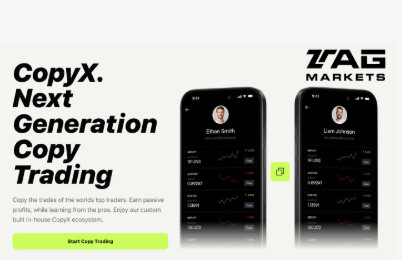
COPYX is described as the technology responsible for copying trades.
TAG Markets is presented as the brokerage provider through which customers maintain trading accounts and execute transactions.
This means the proposition consists of several interconnected components rather than simply one trading product.
For anyone considering participation, it is therefore important to establish exactly how these entities relate to one another.
Customers should be able to determine which company provides each service, which legal entity receives their funds and which company is responsible for the contractual obligations associated with their account.
Reviewing Sonic AI’s Trading Claims
Sonic AI’s promotional material places considerable emphasis on historical trading performance and refers prospective participants to publicly available trading information, including Myfxbook.
Independent access to trading records can be useful when assessing what has happened on a particular account. Depending on the information available, such records may provide details concerning returns, drawdown, trade history and other performance indicators.
However, historical trading results have limitations.
The performance of a particular account does not guarantee that customers will achieve the same results.
Individual outcomes can differ because of execution conditions, spreads, account specifications, market conditions, timing, amplification and other factors.
Historical performance also does not independently establish broader claims about customer profitability, withdrawal experiences, participant numbers or the overall success of the commercial proposition.
Prospective participants should therefore separate:
evidence of historical trading activity
from
evidence supporting the wider commercial and promotional claims.
A trading record may provide information about the first issue without independently proving the second.
How Much Artificial Intelligence Is Actually Involved?
The name Sonic AI naturally suggests that artificial intelligence is an important part of the trading system.
However, promotional material also discusses professional human traders and their involvement in running or managing the strategy.
This makes one question particularly relevant for prospective customers:
What functions does the AI technology actually perform?
Customers may reasonably want to establish whether AI is used for:
- Analysing market conditions.
- Identifying potential trading opportunities.
- Producing trading signals.
- Selecting positions.
- Managing risk.
- Executing trades.
- Managing portfolios.
- Supporting decisions made by human traders.
It would also be useful to understand which elements of the system are fully automated and which remain dependent on human intervention.
A clearer explanation would allow customers to assess what the “AI” component actually contributes and whether the system is best understood as an autonomous trading platform, a technology-assisted human strategy or a combination of both.
Understanding 12X and 24X Account Amplification
The advertised 12X and 24X amplification is one of the more significant aspects of the Sonic AI proposition.
The concept involves giving a trading account substantially greater exposure than the amount initially deposited.
For example, a $10,000 deposit could be described as supporting $240,000 in trading exposure under a 24X arrangement.
This does not mean that the customer receives an additional $230,000 as cash.
Instead, the arrangement relates to the amount of market exposure available to the trading account.
That distinction is critical because increased exposure can magnify the impact of market movements and potentially accelerate losses.
Before accepting an amplified account arrangement, customers should obtain precise information about its operation.
Important questions include:
- Which entity supplies the additional exposure?
- What financial mechanism creates the amplification?
- How is the multiple calculated?
- What margin requirements apply?
- What drawdown threshold triggers action?
- Under what circumstances can positions be liquidated?
- What happens to the customer’s original deposit?
- Who carries the relevant counterparty risk?
- Are additional fees or contractual restrictions involved?
- Are advertised historical results based on accounts using amplification?
A historical trading account showing a particular level of drawdown should not automatically be regarded as evidence of the maximum loss a customer could experience under a different, highly amplified arrangement.
The Sonic AI Affiliate Compensation Model
The Sonic AI proposition also includes an affiliate marketing opportunity.
According to the compensation information reviewed, participants can potentially receive payments connected to trading profits, trading volume, customer deposits and activity generated through multiple levels of an affiliate network.
The published material states that 70% of trading profits is allocated to customers, while 5% is allocated to strategy developers. The remaining 25% is described as being distributed across ten affiliate levels at 2.5% per level.
The advertised lot-based compensation is:
| Level | Advertised Payment |
|---|---|
| Level 1 | $2 per lot |
| Level 2 | $1.50 per lot |
| Levels 3–4 | $1 per lot |
| Levels 5–10 | $0.50 per lot |
If all advertised levels qualify, the total reaches $8.50 per lot.
The compensation material also describes incentives based on qualifying deposits.
According to the information reviewed, the advertised rate starts at 1% when an affiliate generates $10,000 in qualifying direct monthly deposits and can rise to 5% when qualifying deposits reach $1 million.
Additional qualification requirements may apply to certain team-volume incentives.
Promotional material also refers to other rewards, including leadership pools, luxury watches, travel incentives and a claimed $1.2 million family-home reward.
These figures should be treated as advertised incentives unless independently verified.
The affiliate structure is nevertheless an important part of the overall due-diligence picture because the opportunity is not based solely on trading performance.
Financial incentives may also arise from acquiring customers, generating deposits, producing trading volume and developing affiliate networks.
Vitaliy Dubinin and Sonic AI
Vitaliy Dubinin is prominently associated with the promotion of Sonic AI.
Publicly available material also references previous online businesses and opportunities connected with him.
Such information should be approached objectively.
Involvement with a previous business does not establish that Sonic AI operates in the same way, and it does not by itself prove misconduct.
Nevertheless, the background of a promoter can reasonably form part of an individual’s due-diligence process.
Potential customers may wish to investigate the ventures a promoter has previously been associated with, the claims made during those ventures and whether important claims can be independently substantiated.
Ultimately, the current Sonic AI proposition should be judged on evidence relating specifically to its present structure and activities.
Paulo Barroso and His Promotional Background
Paulo Barroso is another individual publicly associated with Sonic AI promotion.
His public profiles describe him as an entrepreneur, marketer, speaker, affiliate and crypto investor.
Available information also references his involvement with a number of previous online programmes and opportunities, including Empower Network, Digital Altitude, Forsage, Safir/ZeniQ, HEAL Worldwide, E1U Life and Legacy Builders.
Some of these programmes later became connected with regulatory action or allegations.
That background should not, however, be treated as proof that Sonic AI is illegitimate or that Barroso has committed wrongdoing in relation to Sonic AI.
Its relevance is primarily as contextual information for people carrying out due diligence.
Where a promoter makes significant statements regarding profitability, legitimacy or independent verification, prospective participants should examine the underlying documentation and evidence rather than relying exclusively on promotional presentations.
AITech and the Question of Corporate Ownership
AITech appears to have an important role within the broader Sonic AI ecosystem.
Promotional infrastructure associates AITech with aspects of the technology and affiliate operation, including the IB Portal used for registration and affiliate activity.
This raises a fundamental corporate question:
Who legally owns and controls AITech?
Prospective customers and affiliates may wish to establish the company’s incorporation information, registered identity, directors, ownership arrangements and available financial information.
This matters because users should know which legal entity is responsible for the service with which they are dealing.
Technical connections should also be interpreted carefully.
A company providing hosting, software, domain services or other infrastructure does not necessarily own or control the business operating through that infrastructure.
Formal corporate records, customer agreements and legal documentation should therefore take precedence over technical associations when determining ownership and responsibility.
TAG Markets and the Brokerage Relationship
TAG Markets is presented as the brokerage provider associated with the Sonic AI trading system.
The related information describes customers maintaining individual trading accounts while TAG Markets provides brokerage and trade-execution infrastructure.
COPYX is presented as the technology used to replicate trades from the Sonic AI strategy.
TAG Markets states that it operates under a Mauritius regulatory framework and identifies the Financial Services Commission of Mauritius as its regulator.
However, the existence of regulatory status in one jurisdiction does not automatically establish that all customers receive identical protections or that every service is authorised everywhere.
Regulatory permissions depend on factors such as the legal entity involved, the precise financial service being provided and the customer’s jurisdiction.
Prospective customers should therefore identify:
- The exact legal entity opening their account.
- The regulator supervising that entity.
- The services covered by its authorisation.
- Whether those services can legally be provided to customers in their country.
- What protections apply to customer funds and assets.
Regulatory Concerns Involving TAG Markets
A central issue in assessing the wider Sonic AI structure is the existence of regulatory warnings associated with TAG Markets.
The information reviewed refers to an Austrian Financial Market Authority warning concerning TAG Markets, T.M. Financial Ltd, TAG Markets Ltd and tagmarkets.com.
According to the material reviewed, the Austrian warning concerned the provision of regulated securities services without the necessary authorisation in Austria.
The material also refers to the Austrian warning being reproduced or referenced by other European regulatory bodies, including Spain’s CNMV and Norway’s Finanstilsynet.
A separate warning relating to tagmarkets.com is also identified from Luxembourg’s CSSF.
These regulatory notices require careful interpretation.
A warning about regulatory authorisation does not automatically mean that a company has been found to be fraudulent.
The specific question addressed by an authorisation warning is whether the relevant entity was permitted to provide particular regulated services within the jurisdiction concerned.
That is materially different from a formal finding that the business as a whole is fraudulent.
Nevertheless, regulatory warnings are important information for prospective customers and should form part of any serious due-diligence process.
Anyone considering opening an account should review the original regulator notices, identify the specific entity named in each notice, understand which activities were addressed and establish whether the regulatory position has since changed.
International Customers and Regulatory Restrictions
The international nature of the Sonic AI promotion creates additional questions concerning customer eligibility.
TAG Markets publishes restrictions relating to customers from certain countries and jurisdictions.
At the same time, promotional material connected with Sonic AI has discussed access to the trading service in countries where restrictions could potentially apply.
The available information raises particular questions concerning potential customers in the United States.
Such issues should be resolved through direct confirmation rather than assumptions.
If a broker restricts customers from a particular country but an affiliate claims that customers from that country can participate using another registration process, the prospective customer should obtain confirmation directly from the broker’s relevant legal entity.
Affiliate statements should not automatically be interpreted as official statements from the broker.
The safest approach is to confirm current customer eligibility and jurisdictional restrictions directly before establishing an account or transferring funds.
Areas That Require Further Verification
The available information leaves several important questions that prospective participants may wish to investigate further.
Ownership and control
Who legally owns Sonic AI, AITech and the other entities involved?
Customer funds
Which legal entity receives customer deposits, where are those funds held and what protections apply?
Regulatory oversight
Which regulator supervises the company with which the customer actually enters into a contract?
Customer jurisdiction
Is that entity authorised to provide the relevant service to customers in the customer’s country?
Amplification mechanism
What legal, financial or contractual arrangement creates the advertised 12X and 24X exposure?
Risk and liquidation
What happens when the account reaches its stated drawdown threshold?
Trade execution
Do customer accounts receive execution conditions comparable with the master trading account used to present historical results?
Affiliate compensation
How are affiliate payments calculated, qualified and distributed, and what conditions can affect them?
Promotional statements
Which claims about customer numbers, trading performance, profitability, rewards and business scale have been independently verified?
These questions are not, by themselves, evidence of wrongdoing.
They are standard questions that a prudent customer should consider when assessing a leveraged trading opportunity combined with an affiliate compensation model.
Sonic AI Legitimacy: What Does the Evidence Show?
The information available does not justify an overly simplistic conclusion.
Sonic AI is publicly presented as a gold-trading strategy using automated trade copying.
Historical trading information is available, and the business promotes a structured affiliate compensation programme.
TAG Markets is identified as the associated broker.
At the same time, several elements warrant careful independent scrutiny, particularly the regulatory warnings associated with TAG Markets, the mechanics and risks of amplification, the relationships between the companies involved and the financial incentives incorporated into the affiliate structure.
The backgrounds of Vitaliy Dubinin and Paulo Barroso may also be relevant to prospective customers conducting broader due diligence.
However, previous business involvement should not be presented as proof of wrongdoing in relation to Sonic AI without specific supporting evidence.
The most balanced conclusion is therefore that prospective participants should undertake substantial independent due diligence before depositing funds.
They should not rely exclusively on:
- Historical trading returns.
- Promotional videos.
- Affiliate presentations.
- Testimonials.
- Social-media statements.
- Promotional rewards.
- Claims that a trading system is “proven”.
- Assertions of independent verification.
Important claims should, where possible, be checked against primary documentation and independent sources.
Questions to Answer Before Depositing Funds
A prospective customer should ideally be able to answer the following questions before participating:
1. Which exact legal entity provides the service?
2. Which entity receives and holds customer funds?
3. Which regulator supervises that entity?
4. Does its regulatory authorisation cover the customer’s jurisdiction?
5. What happens to customer funds when the trading strategy loses money?
6. What does 12X or 24X amplification actually mean in contractual and financial terms?
7. What is the maximum potential loss?
8. What happens when the account reaches its drawdown or liquidation threshold?
9. How are customer withdrawals processed?
10. How are affiliate commissions calculated and paid?
11. Which claims made in promotional material have been independently verified?
12. What happens if the broker, copy-trading system or trading strategy becomes unavailable?
If these questions cannot be answered clearly, with appropriate supporting documentation, prospective customers may wish to exercise additional caution.
Final Conclusion
Sonic AI is presented as a combination of professional gold trading, automated trade copying, amplified market exposure and affiliate marketing.
Its promotional appeal comes partly from the historical trading performance presented to prospective participants and partly from the additional income opportunities offered through the affiliate programme.
However, each element should be assessed separately.
Historical performance does not establish the ownership or legal structure of the companies involved.
Amplified trading exposure introduces risks that cannot be understood simply by examining past returns.
Affiliate compensation does not demonstrate that customers themselves will be profitable.
And a broker’s regulatory position must be evaluated according to the particular legal entity, service and jurisdiction involved.
The regulatory warnings associated with TAG Markets therefore represent significant due-diligence information. At the same time, they should be described accurately and in their proper context. A warning concerning authorisation in a particular jurisdiction should not automatically be characterised as a finding of fraud.
Likewise, the previous professional activities of Vitaliy Dubinin and Paulo Barroso may provide useful background for prospective participants, but they do not independently establish whether Sonic AI is legitimate or illegitimate.
The central question for anyone considering the opportunity is whether the complete Sonic AI structure can be independently understood and verified before funds are deposited.
That requires clarity about the companies involved, the location and protection of customer funds, the applicable regulatory framework, the mechanics of account amplification, the risks associated with leveraged trading, the affiliate compensation structure and the evidence supporting the claims made in promotional material.
Until those issues have been satisfactorily established, prospective participants should approach the opportunity cautiously and conduct their own independent investigation.
Methodology and Disclaimer
This review is based on publicly available information, including company websites, promotional materials, publicly accessible trading records, regulatory publications, archived online content, social-media material, domain information and other open-source sources.
No private systems were accessed, and no hacking or unauthorised access was used.
Where regulatory warnings, allegations or disputed claims are discussed, they are presented in their relevant context and should not automatically be interpreted as established findings of fraud or misconduct.
Corporate ownership, regulatory status, trading performance and promotional claims may change over time. Readers should therefore verify current information directly with the relevant companies and regulators before making financial decisions.
This article is provided for informational purposes only and does not constitute financial, investment or legal advice.
Leveraged trading carries substantial financial risk. Past performance is not a guarantee of future results. Anyone considering participation should ensure that they understand the risks, contractual terms and potential losses before committing funds.