

Legacy Probate International is a Delray Beach, Florida based heir research and inheritance services organization that has worked with beneficiaries and estate professionals since 1966. Through forensic genealogy, the team traces family lines back multiple centuries, using public records and referrals from attorneys, trustees, estate administrators, and executors to identify and verify legal heirs in the United States and abroad. With offices in Delray Beach and Salt Lake City, plus associates in Illinois, California, and New York, the firm supports matters in all 50 states and represents located heirs in probate proceedings by assembling documentary evidence such as certified vital records and required filings. Its researchers bring more than a century of combined experience, and the organization also maintains an annual philanthropic giving program focused on community impact. This background aligns with the technologies shaping modern heir research, where digital records, DNA tools, and secure information management strengthen defensible heirship determinations.
Relevant Technologies in Modern Heir Research
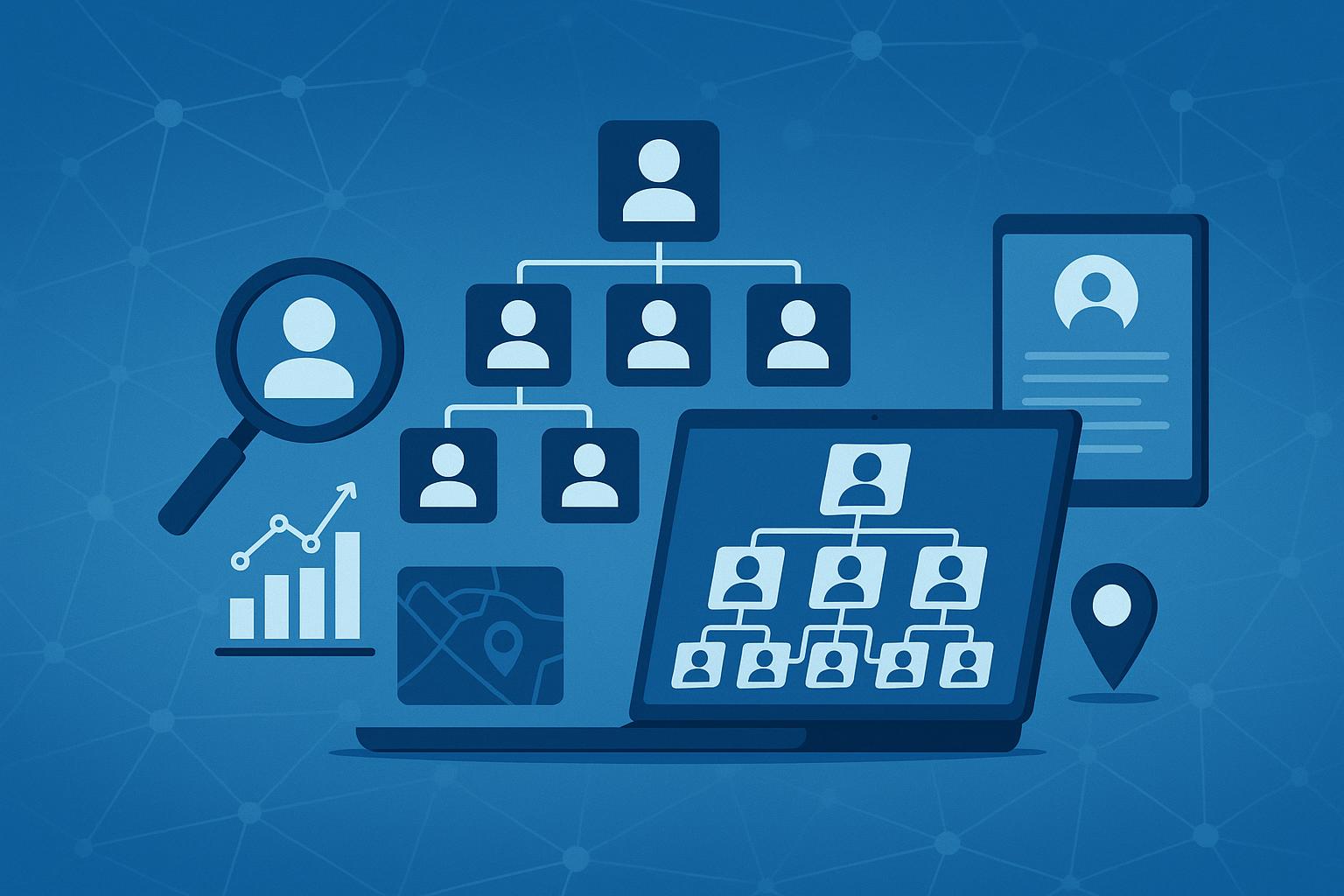
Modern heir research has significantly changed over the past couple of decades. They have evolved from paper-based investigations to sophisticated technology-driven processes. Today, genealogists and probate researchers often combine advanced digital tools, scientific methods, and powerful databases to identify, verify, and locate heirs that may be untraceable, unknown, or unaware of their inheritance rights. These technologies do not just improve accuracy and efficiency; they also provide legal confidence and defensible evidence for courts, trustees, fiduciaries, and attorneys who are involved in estate matters.
Genealogical databases are at the core of modern genealogical research, aggregating historical records, important statistics, and public indexes from around the world. People can now enjoy searchable access to billions of records like marriage licenses, immigration manifests, obituaries, military registrations, census data, and birth certificates. These databases make it possible for researchers to construct family trees that span generations, cross-reference information to verify connections, and uncover relationships that would have taken months or years to find manually.
In probate research, access to digitized international civil and church records can expand the reach of heir identification internationally. Some countries provide online access to archival materials previously available only through in-person visits to local repositories. By leveraging these digital records, researchers can overcome geographical barriers and trace lineage in regions with incomplete or inconsistent paper archives.
The integration of forensic DNA analysis and genetic genealogy has been very instrumental to the advancement of heir research. Tools like autosomal DNA testing, mitochondrial DNA markers, sophisticated matching algorithms, and the Y chromosome have changed how researchers form biological relationships. Genetic genealogy makes it possible to establish kinship in instances where traditional documentation is weak, ambiguous, or absent.
When combined with traditional documentary research, DNA evidence significantly strengthens the proof needed for probate and heirship determinations. Genetic testing helps confirm biological relationships when records are incomplete or unclear, allowing researchers to connect extended family networks with greater confidence. Courts and estate professionals increasingly rely on this combination of scientific evidence and documented research to support accurate and defensible inheritance decisions.
Geographic Information Systems and mapping tools add valuable context to their research by visualizing ancestral movements, land ownership, and settlement patterns over time. By mapping where families lived, migrated, or owned property, researchers can identify relationships and connections that may not be obvious from written records alone. This geographic perspective often reveals patterns that help clarify lineage and inheritance rights.
Artificial intelligence and machine learning are becoming essential tools in modern genealogical research. These technologies can process large volumes of data, identify patterns across records, and suggest potential family connections that might otherwise be overlooked. As machine learning systems continue to improve, they enhance accuracy by recognizing name variations, resolving conflicting information, and prioritizing the most reliable sources.
Once researchers identify potential heirs, locating living individuals presents its own challenges. Online search tools, public record databases, and people location platforms help confirm current contact information, such as addresses, phone numbers, and public profiles. Used responsibly and in compliance with privacy laws, these tools ensure that rightful heirs can be notified and included in the probate process.
Managing the volume of information generated during their research requires strong organizational tools. Document management systems and cloud-based collaboration platforms enable researchers to securely store records, share findings with legal professionals, and maintain clear documentation throughout a case. These systems support accuracy, transparency, and efficient communication, all of which are essential when presenting research findings during estate administration or probate proceedings.
About Legacy Probate International
Headquartered in Delray Beach, Florida, the firm has provided inheritance and heir research services since 1966, working with beneficiaries as well as attorneys, trustees, executors, and administrators. Its forensic genealogy approach draws on public sources and professional referrals to trace family lineages back to the 1800s, identify and locate heirs in all 50 U.S. states and abroad, and assemble supporting records such as certified birth and marriage certificates. The organization represents heirs in probate court and charges no fees until a claim is proved.