

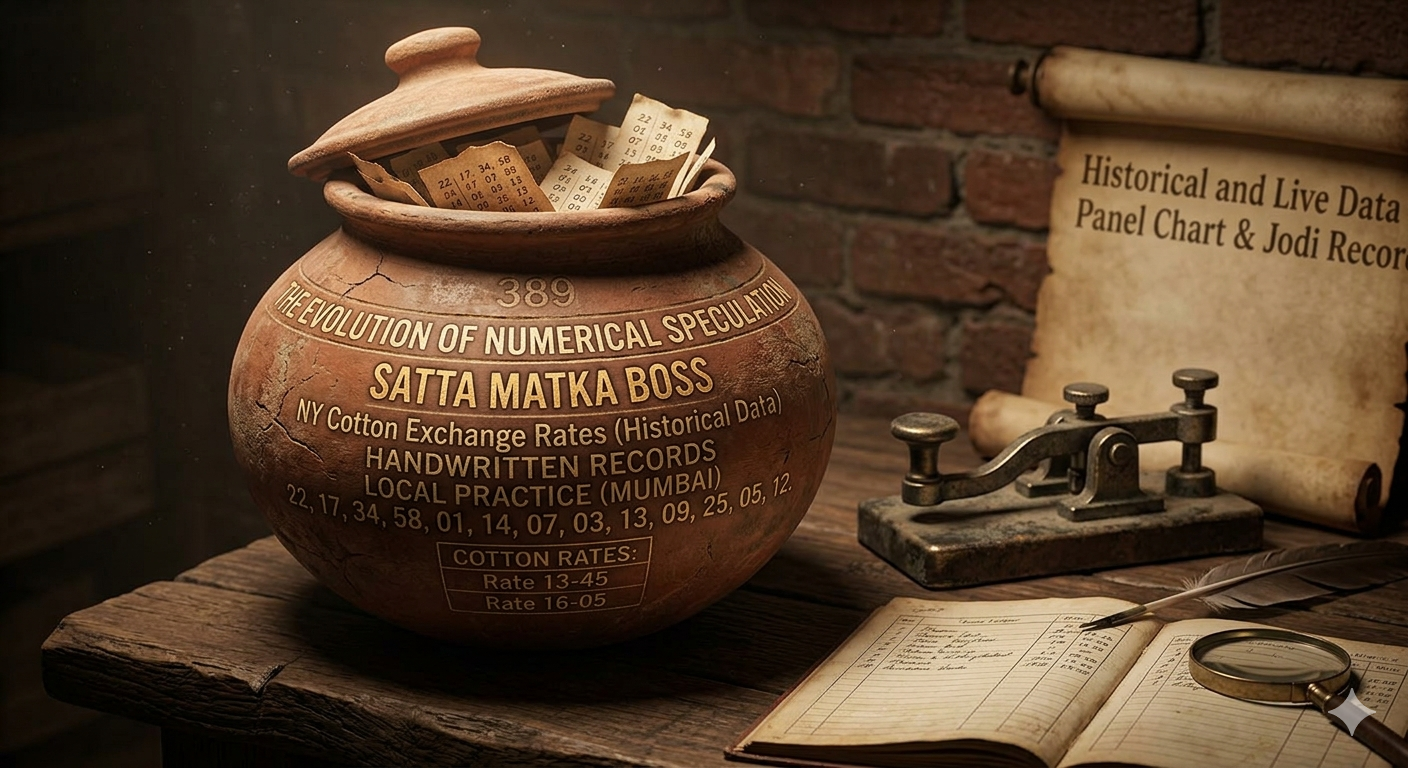
The world of numbers has always fascinated the human mind. From ancient mathematicians to modern-day traders, the quest to predict patterns and sequences has been a constant pursuit. Among the various forms of traditional gaming that have survived the transition into the digital age, Satta Matka stands out as a unique cultural and mathematical phenomenon. What began as a local practice in the heart of Mumbai has now transformed into a global digital interest, attracting millions who seek to test their analytical skills and intuition.
A Historical Perspective
To understand the current landscape of the game, one must look back at its roots. In the 1960s, the game was fundamentally different, revolving around the opening and closing rates of cotton transmitted from the New York Cotton Exchange to the Bombay Cotton Exchange. When the New York exchange stopped the practice in 1961, the enthusiasts didn’t quit; they innovated.
The introduction of the “earthen pot” or Matka allowed the game to continue using pieces of paper labeled with numbers from 0 to 9. This era birthed legends and “Kings” of the industry who structured the game into organized markets like Kalyan and Worli. Today, while the pots have been replaced by sophisticated random number generators and digital algorithms, the core thrill of “predicting the unpredictable” remains unchanged.
The Psychology of a Player
What drives someone to participate in a game of numbers? It isn’t just the potential for financial gain. For many, it is a psychological challenge—a battle of wits against probability. A seasoned player doesn’t view the results as random occurrences. Instead, they see them as data points.
The human brain is wired to find patterns, and in the world of Matka, these patterns are found in “Panel Charts” and “Jodi Records.” Success in this field requires a level of emotional discipline that few possess. The biggest hurdle isn’t the game itself, but the player’s own impulsiveness. Those who treat it as a calculated risk rather than a desperate gamble are the ones who sustain themselves over time.
Navigating the Digital Noise
In 2026, the challenge isn’t finding a place to play; it’s finding a place that provides authentic information. The internet is flooded with “fixed guessing” scams and fraudulent websites that mislead newcomers. For a player, the most critical asset is a reliable source for live results and historical data. Without accurate charts, any strategy is essentially building a house on sand.
Experienced players often gravitate toward established names to anchor their strategy. For instance, finding a trusted Satta Matka Boss platform is often the first step for anyone looking to move beyond simple guesswork and into the realm of structured play. Such platforms provide the necessary transparency that the offline markets of the past often lacked.
Strategy Over Superstition
While many beginners rely on dreams, lucky dates, or superstitions, the professionals rely on mathematics. The game is divided into various formats: Single, Jodi, Panna, and Sangam. Each has its own odds and its own level of difficulty.
- Probability Management: Professionals never put all their stakes on a single number. They spread their risk across different combinations based on the “average” movement of the week’s chart.
- Trend Analysis: By looking at the last 30 days of a particular market, players can identify “hot” and “cold” numbers. While history doesn’t guarantee the future, it certainly provides a roadmap.
- Financial Discipline: This is the golden rule. A human approach to the game involves setting a “stop-loss” limit, much like in stock trading. Knowing when to stop is more important than knowing when to play.
The Cultural Impact and Future
Satta Matka has moved beyond being just a game; it is a part of the social fabric in many regions. It has influenced local slang, cinema, and even literature. As technology continues to evolve with AI and blockchain, the game is expected to become even more secure and transparent. The shift toward mobile applications has allowed for a community-driven experience where players can share insights and tips in real-time, making it a more interactive and less isolated pursuit.
Conclusion
The world of Satta Matka is complex, vibrant, and deeply rooted in the human desire to master chance. It is a game that rewards the patient and punishes the greedy. As long as there are numbers and people willing to study them, the legacy of the Matka will continue to thrive in the digital shadows. Whether you are a casual observer or a dedicated analyst, the key to navigating this world is balance—balancing intuition with data, and excitement with caution.