


Ricky Sayegh, MD, is an interventional pain management specialist based in Paramus, New Jersey, who provides personalized pain management, wellness, and general medical services to patients in and around Bergen County. With more than two decades of medical practice, Dr. Sayegh has experience with back and neck injections, vein treatments, comprehensive evaluations, preventive health, and care involving the neck, joints, and lower back. His background also includes internal medicine, critical intensive care, emergency medicine, and employee wellness support as former chief medical officer at Con Edison in New York City. This professional experience relates directly to spinal compression fracture care, where accurate evaluation and appropriate interventional pain management options, including kyphoplasty and vertebroplasty, may help selected patients address pain, stability, and mobility concerns.
Kyphoplasty and Vertebroplasty to Treat Spinal Compression Fractures
Spinal compression fractures are small breaks in the vertebrae that weaken the spine. They are very common, with over one million yearly cases in the United States. These fractures can cause sudden, severe back pain that worsens with movement, numbness, tingling, and even limited mobility.
The most common are wedge fractures, forming on the front of the vertebra. Crush fractures affect the entire vertebra, while burst fractures are the most serious and lead to bone pieces spreading in different directions. They can be stable, meaning that the bone doesn’t move out of place, or unstable, occurring when bone pieces move and can affect nerves and tissues.
Compression fractures are often linked to osteoporosis, a condition that weakens bones and increases their likelihood of collapsing. However, they may also be caused by injuries, accidents, or cancer. In the long term, they can lead to complications that include kyphosis (forward curving spine), chronic pain, additional fractures, and even problems controlling the bladder.
The treatment typically focuses on relieving pain, often through medication, and stabilizing the bones with braces. However, these treatments may not be enough. In these cases, minimally invasive procedures like kyphoplasty and vertebroplasty can help stabilize the spine, reduce pain, and restore mobility.
Proper diagnosis is the first step in treating compression fractures. After a physical exam, the doctor will recommend imaging tests like a spine X-ray, a CT scan, or an MRI. Additional tests include a DEXA scan to measure bone density and a myelogram for a detailed picture of the spine. Depending on the severity of the symptoms, interventional pain management may be recommended.
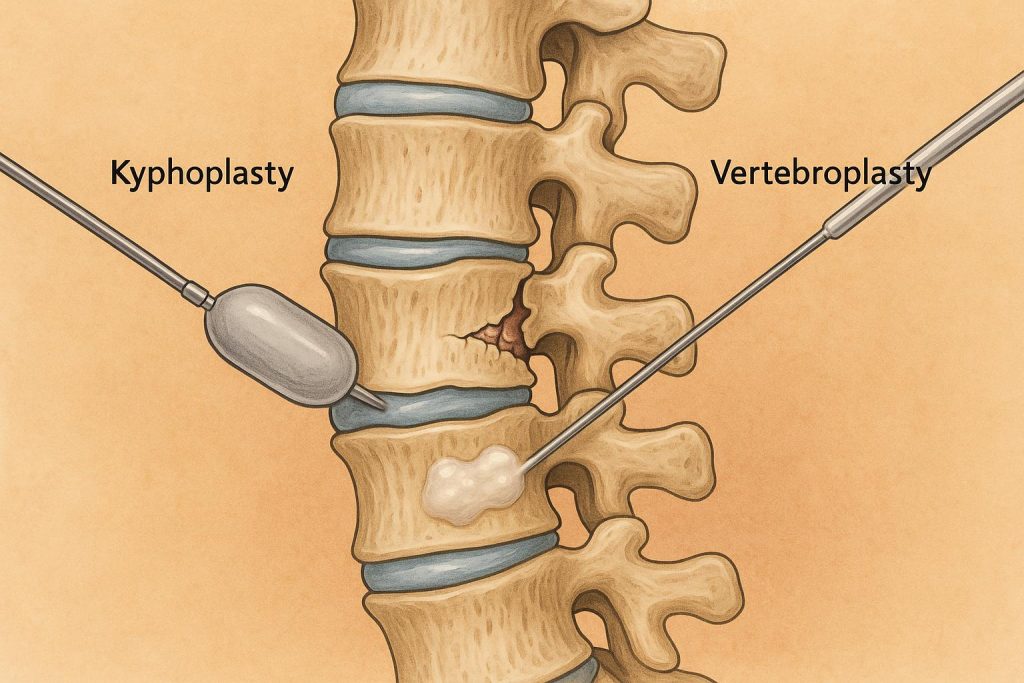
Vertebroplasty is an established minimally invasive procedure developed to treat compression fractures. During the procedure, a physician injects a specialized medical-grade cement directly into the fractured vertebra. This cement quickly hardens, stabilizing the bone and reducing painful movement at the fracture site.
Vertebroplasty is typically performed on an outpatient basis and can often provide rapid pain relief, sometimes within days. It is generally recommended for patients with severe or persistent pain who have not responded to more conservative therapies.
Kyphoplasty is a similar procedure but includes an additional step that may offer further structural benefit. Before the cement is injected, a small balloon is inserted into the fractured vertebra and gently inflated. Once the balloon is removed, the space is filled with bone cement, stabilizing the fracture.
Like vertebroplasty, kyphoplasty is an outpatient procedure and lasts less than one hour. Patients can return to normal activities shortly after the procedure. Aside from providing pain relief and spine stability, kyphoplasty may help reduce spinal deformity in certain patients, especially if performed shortly after the fractures occurred.
While both procedures aim to relieve pain and stabilize the spine, there are key differences between them. Kyphoplasty employs a balloon to restore vertebral height and may reduce spinal curvature, whereas vertebroplasty focuses primarily on stabilization. The choice between the two depends on several factors, including the age and severity of the fracture, the patient’s overall health, and the goals of treatment.
Kyphoplasty and vertebroplasty typically require only small incisions, and are associated with relatively short recovery times. Many patients experience significant pain relief and improved mobility, allowing them to return more quickly to their normal activities.
As with any medical procedure, there are potential risks. Infection, bleeding, or leakage of the cement may occur. However, these complications are uncommon, and the success rates in relieving pain are around 92 percent for kyphoplasty and 87 percent for vertebroplasty. Consulting with a qualified pain management or spine specialist is essential for developing a treatment plan and determining whether one of these procedures is appropriate.
About Ricky Sayegh
Dr. Sayegh is an interventional pain management physician in Paramus, New Jersey, serving patients in and around Bergen County. He offers pain management, wellness, and general medical services, with experience in neck and back injections, vein treatments, preventive health, and lower back, joint, and neck concerns. His background includes internal medicine, critical intensive care, emergency medicine, employee wellness at Con Edison, and medical training through New York Medical College and Mount Sinai School of Medicine.